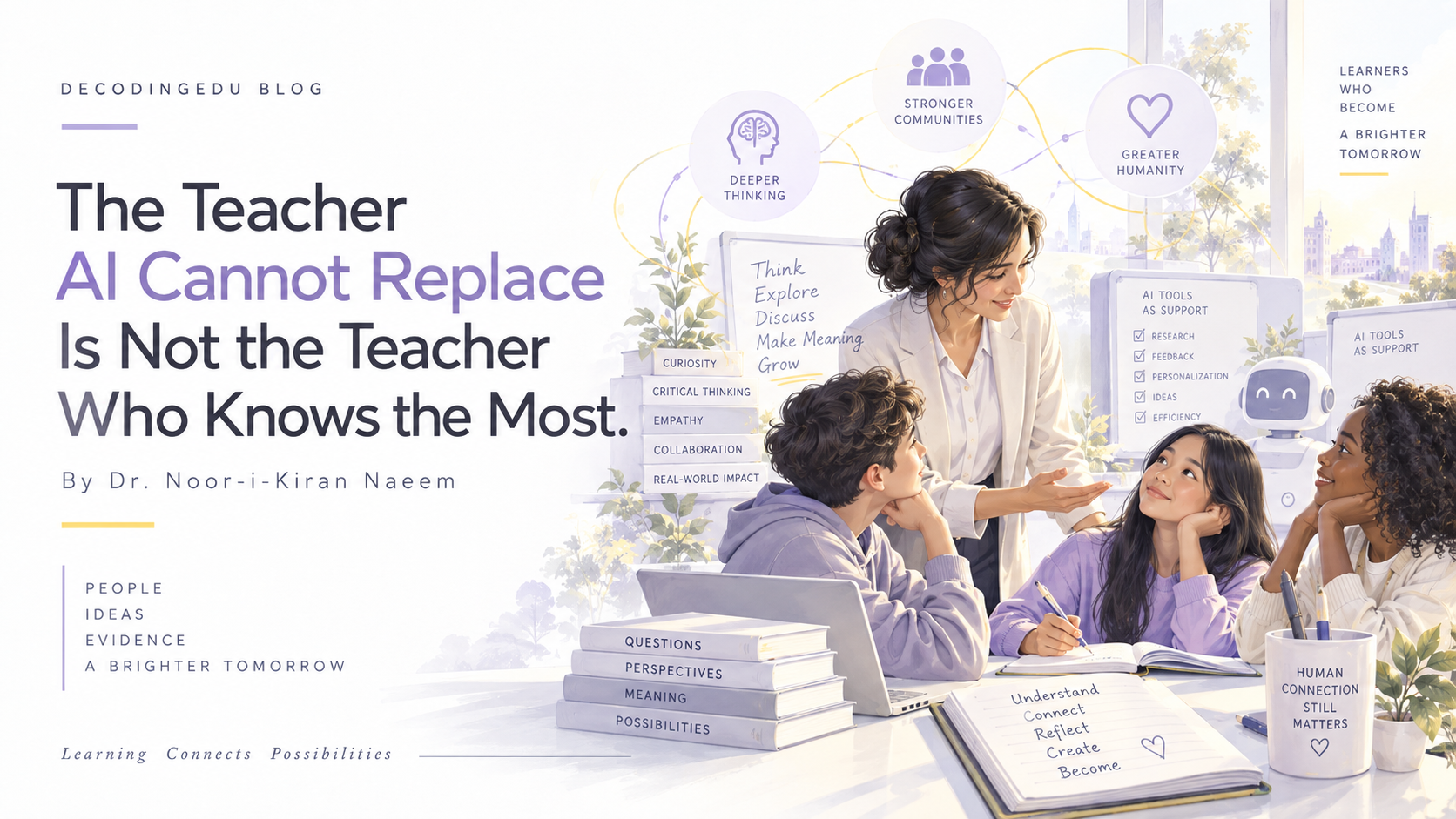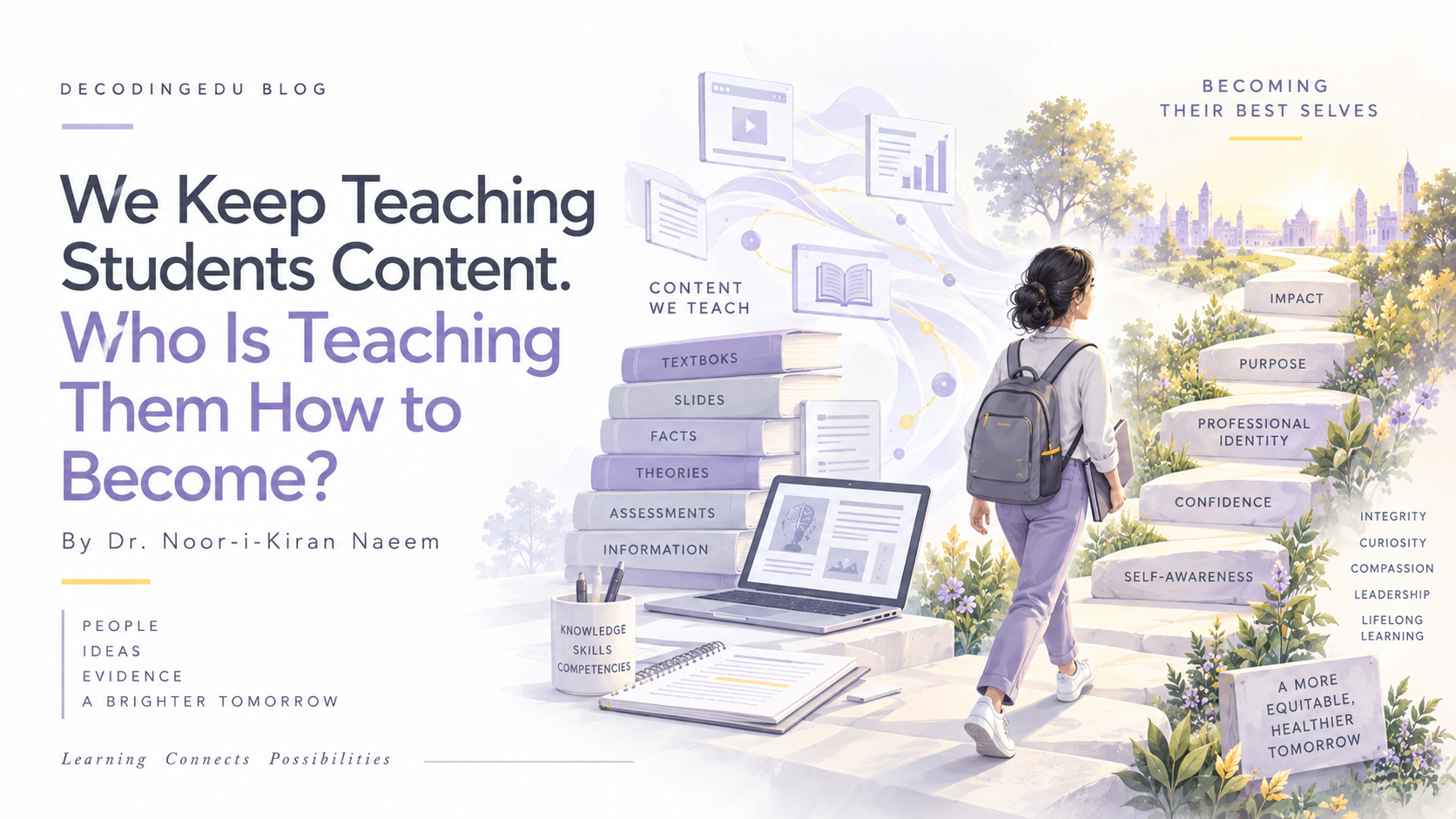
I want to be careful with this argument, because it is easy to make it badly. The version I am not making is: AI cannot replace teachers, therefore we do not need to think carefully about AI in education. That is a comforting conclusion that does not follow from the premise.
The version I am making is more specific. There is a kind of teaching that happens in health professions education — a kind that shapes not just what a learner knows but who they are becoming — and that kind of teaching is irreducibly relational. It requires a human being who is present, who notices, who responds to what is actually in front of them rather than to a pattern in training data.
What AI Can Do Well
Let me be honest about what AI can do, because I think the argument is stronger when it starts from genuine acknowledgement.
AI can generate high-quality content at scale. It can provide immediate, detailed feedback on written work. It can simulate clinical scenarios with a fidelity that was not possible five years ago. It can personalise learning pathways in ways that human educators, managing large cohorts with limited time, simply cannot. These are real capabilities. They address real constraints. They will change education — are already changing it.
What Remains Irreducibly Human
But here is what I keep coming back to. The moments that shaped me as an educator — and the moments that, when I talk to former students, they identify as formative — were not moments of content delivery. They were moments of being seen.
A supervisor who noticed that I was struggling and named it, not to evaluate me but to sit with me in it. A mentor who shared their own uncertainty about a clinical decision, not as a teaching strategy but as a genuine act of intellectual honesty. A teacher who pushed back on something I said in a way that was uncomfortable and necessary and that I still think about.
These moments require presence. They require the kind of attention that comes from actually caring about the person in front of you — not as a learner to be optimised, but as a human being in the process of becoming something.
AI can simulate this. It cannot do it. The difference is not subtle.
The Risk of Substitution
The risk I am most concerned about is not that AI will replace teachers. It is that, under pressure — of time, of resources, of scale — institutions will use AI to substitute for the relational dimensions of teaching that are hardest to measure and easiest to cut.
Feedback can be automated. Mentorship cannot. Content delivery can be scaled. The conversation that changes how a student thinks about who they are as a future clinician cannot.
If we are serious about professional identity formation — and in health professions education, we should be — then we need to be very deliberate about what we protect as AI takes on more of what it can do well. The teacher AI cannot replace is not a romantic idea. It is a specific role, with specific functions, that requires specific investment. The question is whether we will make that investment, or whether we will discover its absence only after it is gone.