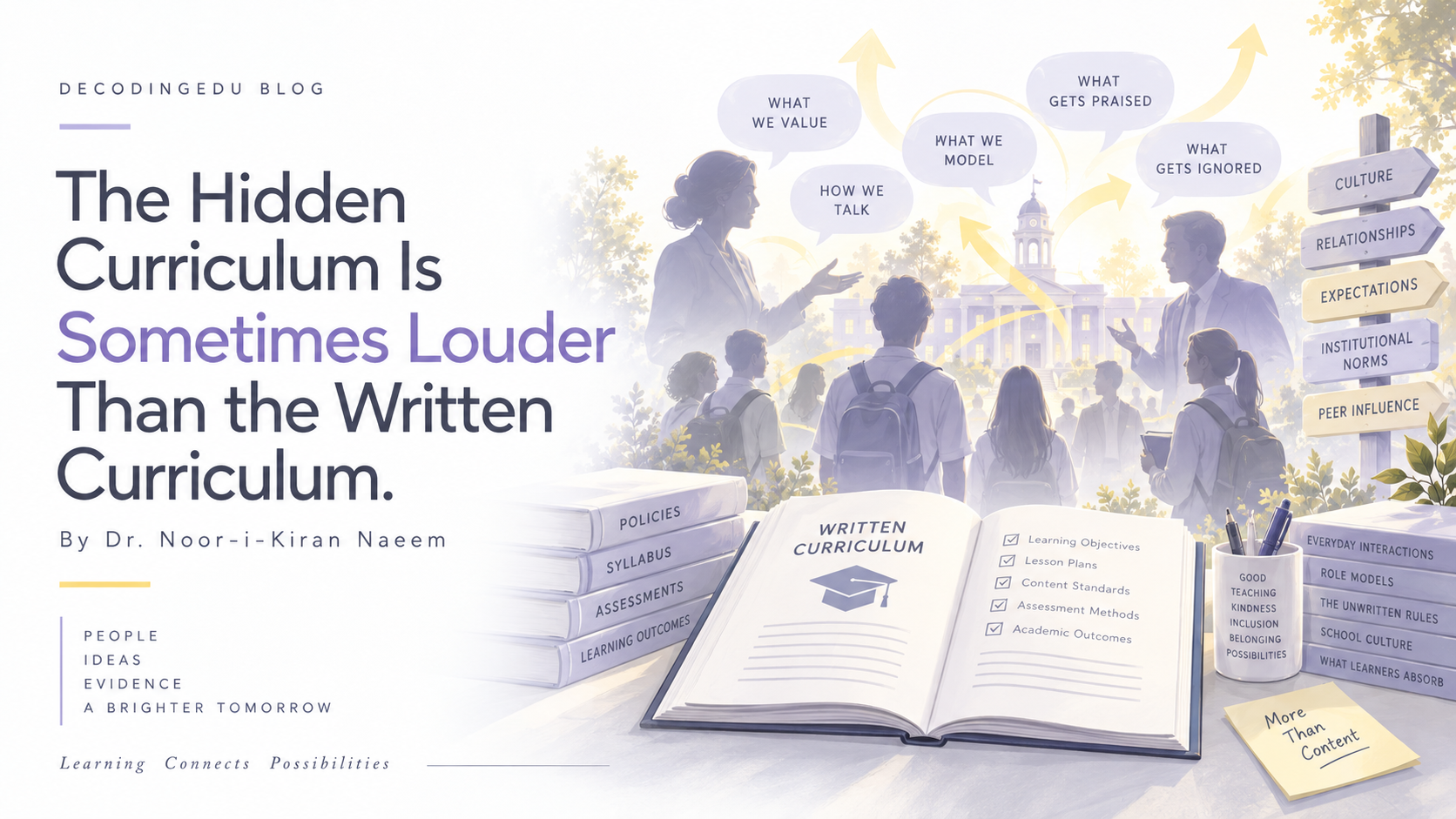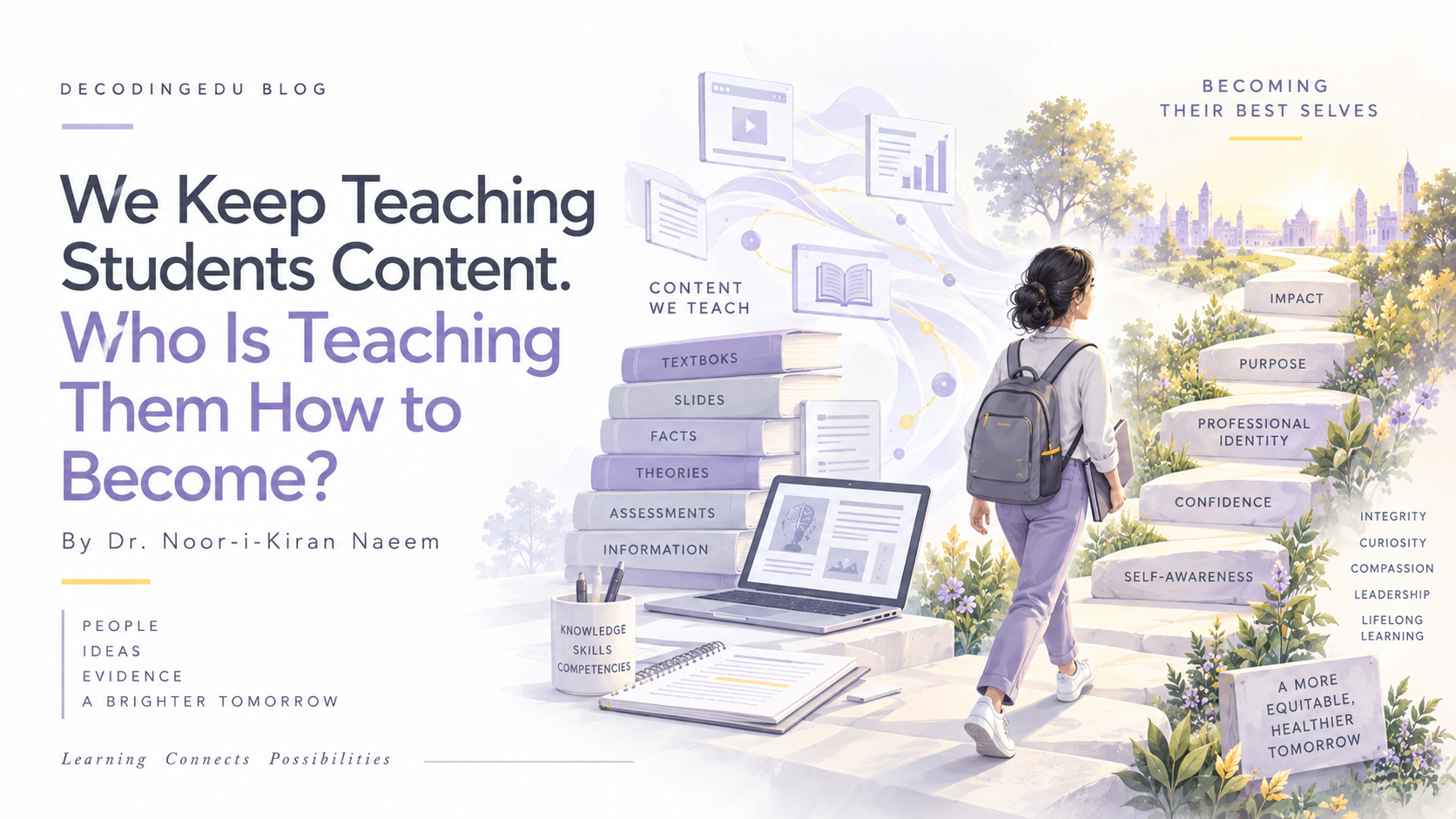
If you look at a typical health professions curriculum, you will find a great deal of content. Anatomy. Physiology. Pharmacology. Clinical skills. Communication. Evidence-based practice. The list is long, and it keeps getting longer as the field adds new priorities — digital health, sustainability, interprofessional education — to a curriculum that was already full.
What you will find much less of is deliberate attention to the question of who students are becoming.
The Distinction That Matters
There is a difference between learning content and forming an identity. A student can learn the content of professionalism — the definitions, the frameworks, the case studies — without that learning changing how they think of themselves as a future professional. Identity formation is a different process. It is slower, less linear, more dependent on experience and relationship and reflection than on instruction.
Health professions education has always known this, at some level. The concept of professional socialisation has been in the literature for decades. We know that students learn to be doctors — or nurses, or physiotherapists, or pharmacists — not just from lectures and textbooks but from immersion in clinical environments, from watching how their seniors behave, from the accumulated experience of being treated as a learner in a particular kind of community.
But knowing this and being deliberate about it are different things.
What Deliberate Looks Like
Deliberate professional identity formation means building into the curriculum explicit opportunities for students to reflect on who they are becoming — not just what they are learning. It means creating space for the questions that do not have clean answers: What kind of doctor do I want to be? How do I hold the tension between the values I came in with and the culture I am being socialised into? What do I do when the system asks me to act in ways that conflict with my values?
It means taking seriously the role of narrative — of story — in identity formation. Students who can articulate their own story, who can locate themselves in a tradition and a community, who have language for their values and their struggles, are more resilient and more ethically grounded than students who have only been taught content.
It also means faculty development. You cannot build a curriculum for professional identity formation without educators who have thought about their own professional identity — who can model the kind of reflective, values-grounded practice they are trying to cultivate in their students.
The Question Worth Asking
The next time you review a curriculum, I want to suggest a question worth asking: where, specifically, are we attending to who students are becoming? Not the professionalism module. Not the communication skills sessions. But the sustained, deliberate, longitudinal attention to professional identity that the research says matters.
If the answer is unclear — if it is distributed across the curriculum in ways that are implicit rather than intentional — that is worth addressing. The content will always compete for space. Professional identity formation will not advocate for itself. Someone has to decide it matters enough to protect.
We keep teaching students content. The question is who is teaching them how to become.