There is a pattern I keep seeing in conversations about AI in education. Someone demonstrates a tool — it generates a quiz, summarises a paper, drafts a case scenario — and the room is impressed. Then someone asks: how do we use this well? And the conversation stalls.
We are very good at adopting. We are much less practised at evaluating.
The Speed Problem
AI tools are being integrated into educational workflows faster than the critical frameworks to use them well are being developed. This is not unique to education — it is happening across every sector. But in health professions education, the stakes are different.
When an educator uses an AI-generated case scenario without checking it for clinical accuracy, that error does not stay in the classroom. It shapes how a student thinks about a patient presentation. When an AI-generated assessment item contains a subtle conceptual flaw, it does not just produce a bad exam question — it potentially reinforces a misconception in a future clinician.
The downstream consequences of poor educational content in health professions training are not abstract. They are clinical.
What Uncritical Adoption Looks Like
I want to be specific, because I think the problem is often described too vaguely.
Uncritical AI adoption in education looks like: using AI-generated learning objectives without checking whether they are actually measurable or aligned to the right level of Bloom's taxonomy. It looks like accepting AI-summarised literature without verifying the original sources. It looks like deploying AI-generated feedback to students without reviewing whether that feedback is accurate, constructive, or appropriate to the learner's stage.
None of these are hypothetical. I have seen all of them.
The Framework We Are Missing
What we need — and largely do not yet have — is a shared framework for AI literacy in health professions education that goes beyond tool familiarity. Tool familiarity asks: can you use this? AI literacy asks: do you understand what this tool is doing, what it cannot do, and what your responsibility is when you use it?
That framework needs to address accuracy verification, bias recognition, appropriate use boundaries, and the question of what human judgement must remain in the loop regardless of how capable the tool becomes.
It also needs to be honest that these questions do not have settled answers yet. We are building the plane while flying it. The responsible response to that is not to stop flying — it is to be very clear about what we do not yet know.
What I Am Asking For
I am not arguing against AI in education. I use it. I find it genuinely useful. I think it has real potential to address some of the access and capacity problems that have long constrained health professions education, particularly in under-resourced contexts.
What I am asking for is a slower, more deliberate conversation about how we use it — one that takes the downstream consequences seriously, that builds critical frameworks alongside adoption, and that holds educators accountable for the quality of what they put in front of learners, regardless of what tool generated the first draft.
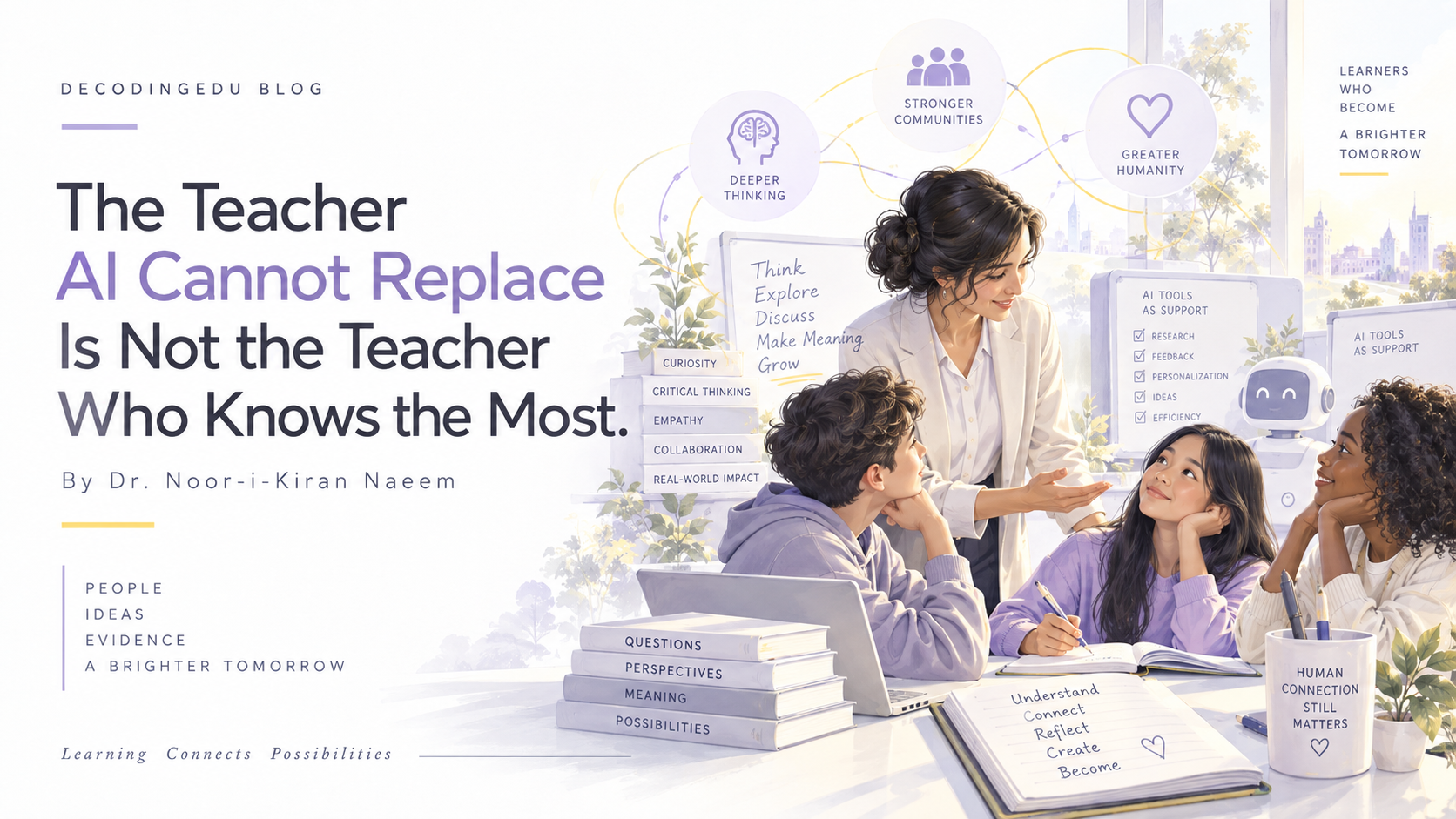
The risk nobody is talking about is not that AI will replace educators. It is that educators will use AI without thinking, and call it innovation.